March 7, 2026
News
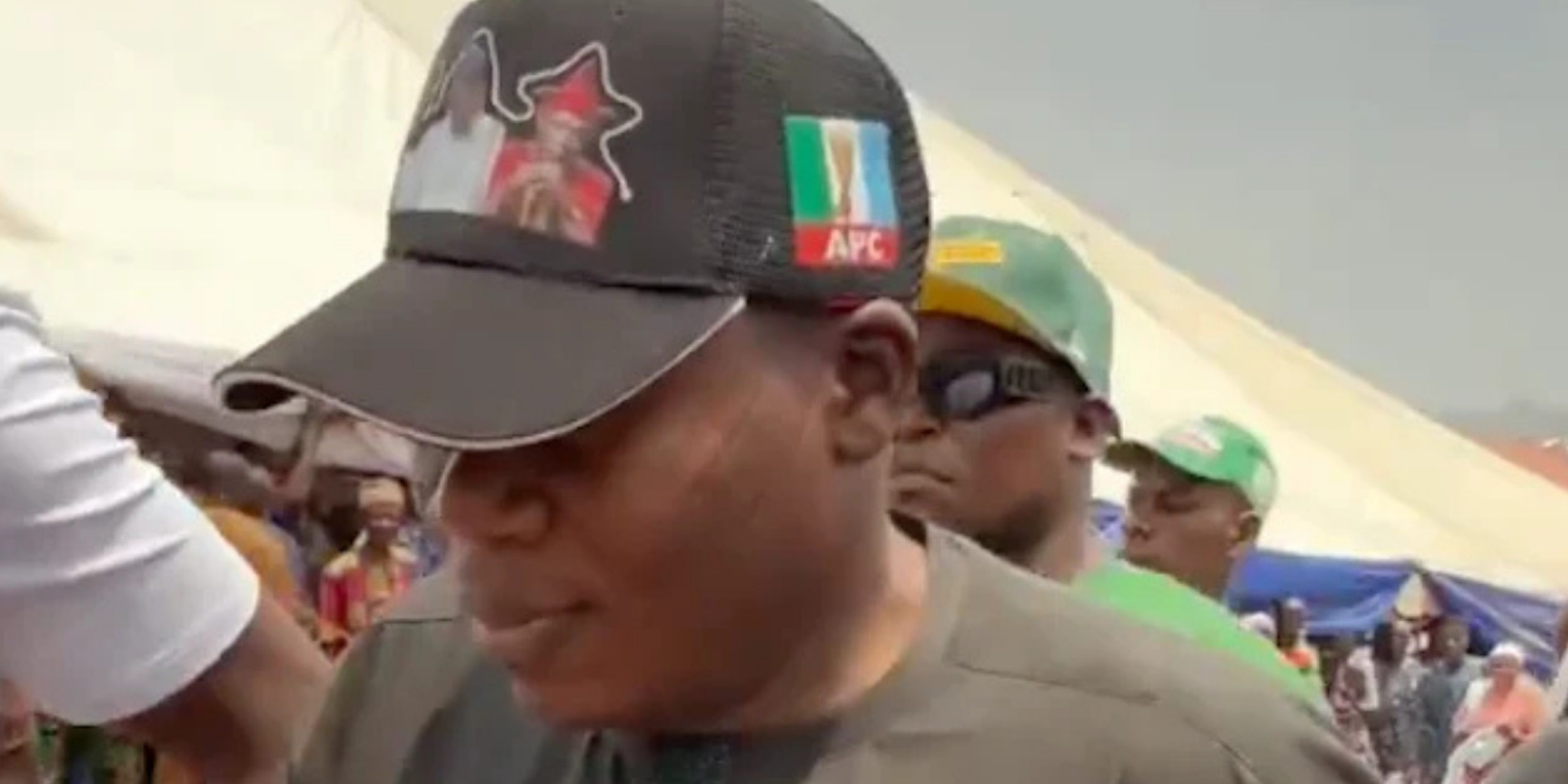
A Yoruba nationalist organisation has openly questioned the political loyalty of prominent Yoruba Nation agitator, Sunday Adeyemo, popularly known as Sunday Igboho, following his reported decision to align with Nigeria’s ruling party, the All Progressives Congress (APC).
The criticism came from the Yoruba Revolutionary Movement (YOREM), which described the development as troubling for supporters of the Yoruba self-determination struggle.
In a strongly worded statement signed by the group’s National Coordinator and Convener, Mekunnu Koya Wale Balogun, the organisation questioned whether Igboho’s latest political move should be seen as deception, betrayal, or a combination of both.
According to the group, the decision by the Yoruba Nation campaigner to publicly associate with the APC has triggered shock and debate among supporters of the agitation for an independent Yoruba state.
“How should Sunday Igboho himself be politically characterised today?” the group asked in the statement.
“Should his decision to abandon the Yoruba Nation agitation and openly align with the APC be interpreted as ‘eke’ (deception), ‘odalẹ’ (betrayal), or perhaps a mixture of both?”
The organisation stressed that the struggle for Yoruba self-determination did not begin with Igboho and will not end with him.
“The Yoruba struggle for self-determination is a historical process rooted in the quest for dignity, autonomy and justice. It did not begin with Sunday Igboho and it certainly will not end with him,” the group said.
YOREM argued that liberation movements around the world often face setbacks when collective struggles become overly dependent on individual personalities rather than strong institutions and shared ideology.
According to the statement, the rapid rise of Igboho during the peak of the Yoruba Nation agitation helped create a culture of personality worship within parts of the movement.
“At a certain point, some sections began presenting him not just as a participant in the struggle but as its singular embodiment,” the group said.
It added that some supporters even elevated the agitator to near-mystical status, portraying him as a heroic figure destined to deliver Yoruba independence.
The organisation warned that such narratives weakened the broader movement by sidelining veteran activists who had championed the cause long before Igboho’s emergence.
Among those referenced were longstanding campaigners including Gani Adams and other early figures who sustained the agitation during more difficult political periods.
YOREM also traced the roots of the personality-driven culture to internal divisions within the Oodua People’s Congress (OPC), where it said excessive loyalty to individual leaders gradually replaced collective decision-making.
The group noted that earlier leadership structures within the OPC encouraged open debate and strategic discussions among members, rather than unquestioning loyalty.
It further reflected on the later involvement of historian and nationalist leader Banji Akintoye, whose efforts helped revive the agitation and expand its visibility internationally.
Through organisations such as the Yoruba World Congress, Ilana Omo Oodua and the Yoruba Self Determination Movement, the campaign for Yoruba autonomy gained renewed ideological structure and diaspora support.
However, YOREM argued that even during this phase, the strategic error of elevating Igboho as the central symbol of the movement persisted.
The group insisted that the quest for an independent Yoruba state must remain a collective responsibility shared by Yoruba people across Nigeria and the diaspora.
“Our minimum and non-negotiable demand remains the emergence of a self-governing Oodua Republic,” the statement said.
“The responsibility for achieving this vision rests with Yoruba sons and daughters everywhere, not with politicians operating within the Nigerian state.”
YOREM reaffirmed that despite recent political developments, the push for an independent Oodua Republic will continue.