By SUNTV Global Channel | January 14, 2026
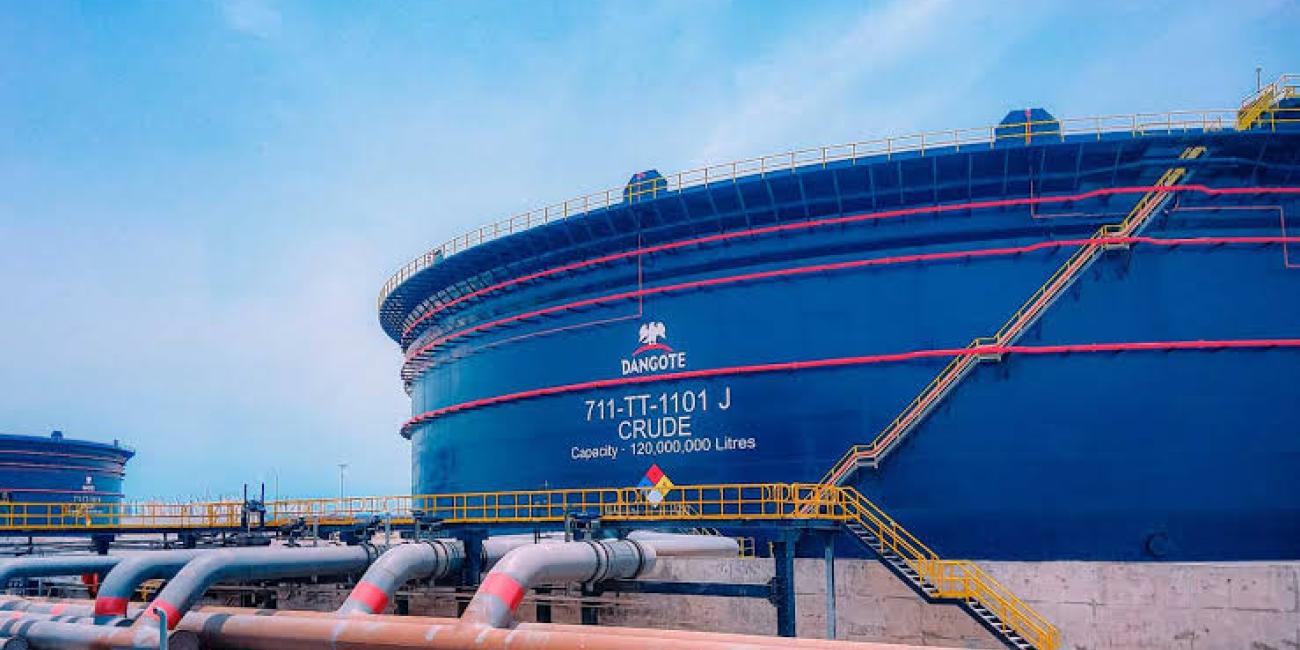
Dangote Petroleum Refinery Plc has assured Nigerians that fuel scarcity is now a thing of the past, declaring that the country has officially transitioned from petrol shortages to fuel abundance.
The assurance was given on Wednesday in Lagos by the newly appointed Managing Director of the refinery, Mr. David Bird, during a press briefing following uninterrupted fuel supply across the country during the recent Christmas and New Year festivities.
According to Bird, the refinery’s performance during the holiday season demonstrated its capacity to consistently meet domestic fuel demand, marking a major milestone in Nigeria’s energy sector.
“This is a significant achievement. Nigeria is no longer struggling with availability; we are now enjoying abundance,” he said.
World-Class Fuel, Cleaner Environment
Beyond volume, Bird revealed that Nigerians are now consuming world-class fuels produced to Euro 5 standards, noting that Dangote Refinery exports petrol to Europe and aviation fuel to global markets including Dubai.
He criticised the long-standing practice of dumping substandard fuel products in West Africa, describing Dangote Refinery’s output as a major public health breakthrough due to lower sulphur content and cleaner emissions.
“This is not just about quantity. It is about quality. Cleaner fuel means better health outcomes for millions of Nigerians,” he stated.
Massive Daily Output, Economic Stability
Bird disclosed that the refinery is currently capable of handling up to 1,000 fuel trucks daily, with production reaching over 50 million litres of finished products per day, sometimes exceeding 52 million litres.
He added that stable fuel supply and pricing are already contributing to economic stability and supporting the naira.
According to him, Dangote Group’s decision to expand refining capacity and increase polypropylene production to 2.4 million tonnes will further boost local manufacturing, create jobs, and strengthen Nigeria’s industrial ecosystem.
“This expansion is population-led. Lower production costs will unlock growth across multiple sectors,” Bird said.
Petrol Pricing Not Anti-Competitive — Dangote
Reacting to claims by some industry players that the refinery’s ₦739 petrol price is anti-competitive, Bird dismissed the allegations, insisting that the pricing is market-driven.
“The retail price is fully competitive. Consumers have choices. What we need now is a better regulatory framework that reflects market realities,” he said.
Local Refining Shields Nigeria From Global Shocks
Also speaking at the briefing, Dangote Group’s Head of Communications, Mr. Anthony Chiejina, noted that Nigeria now benefits from being a fuel-producing nation, especially amid global supply disruptions such as the ongoing crisis in Venezuela.
Bird emphasized that domestic refining is critical to insulating Nigeria from global oil price volatility, explaining that heavy reliance on fuel imports exposes the country to external shocks.
“Local production brings stability. It reduces exposure to international price fluctuations and supply disruptions,” he said.
Expansion Plans and Future Products
On refinery expansion, Bird described the strategy as “ruthless replication,” revealing that additional steel structures are expected to rise before the end of 2026, with new facilities potentially completed within three years.
He noted that the refinery is currently in a stabilisation phase but has maintained steady supply since ramping up operations in the second half of 2025.
“Dangote Refinery is not a conventional single-crude plant. It is a highly flexible refining, blending, and trading platform,” he explained.
Bird also disclosed that off-take has matched production, with excess volumes available for export when necessary.
On distribution, he revealed that about 4,000 trucks are currently on-site, with a computerised security system being introduced to ensure transparency and accurate product delivery.
Petrochemicals, LPG, and Crude-for-Naira
The Managing Director highlighted polypropylene as a core part of the refinery’s long-term strategy. He said the current plant produces 800,000 tonnes, with expansion plans set to raise output to 1.2 million tonnes, and eventually 2.4 million tonnes.
Future diversification may include detergents, lubricants, base oils, and Liquefied Petroleum Gas (LPG), driven by import substitution and rising population demand.
On the crude-for-naira initiative, Bird disclosed that 30–40 per cent of the refinery’s crude supply currently comes through the programme, adding that continued engagement with NNPC Limited and the federal government could improve volumes.
He noted that the initiative has played a significant role in stabilising the naira and could be expanded in Nigeria’s long-term economic interest.
“Nigeria now has the capacity to refine world-class fuel locally. This is a continental project, not just a refinery,” Bird concluded.
— SUNTV Global Channel