April 14, 2026 | News
Fresh controversy has erupted over the ongoing African tour of Pope Leo XIV, as concerns mount over the exclusion of some of the continent’s largest Catholic populations—including Nigeria—from his historic visit.
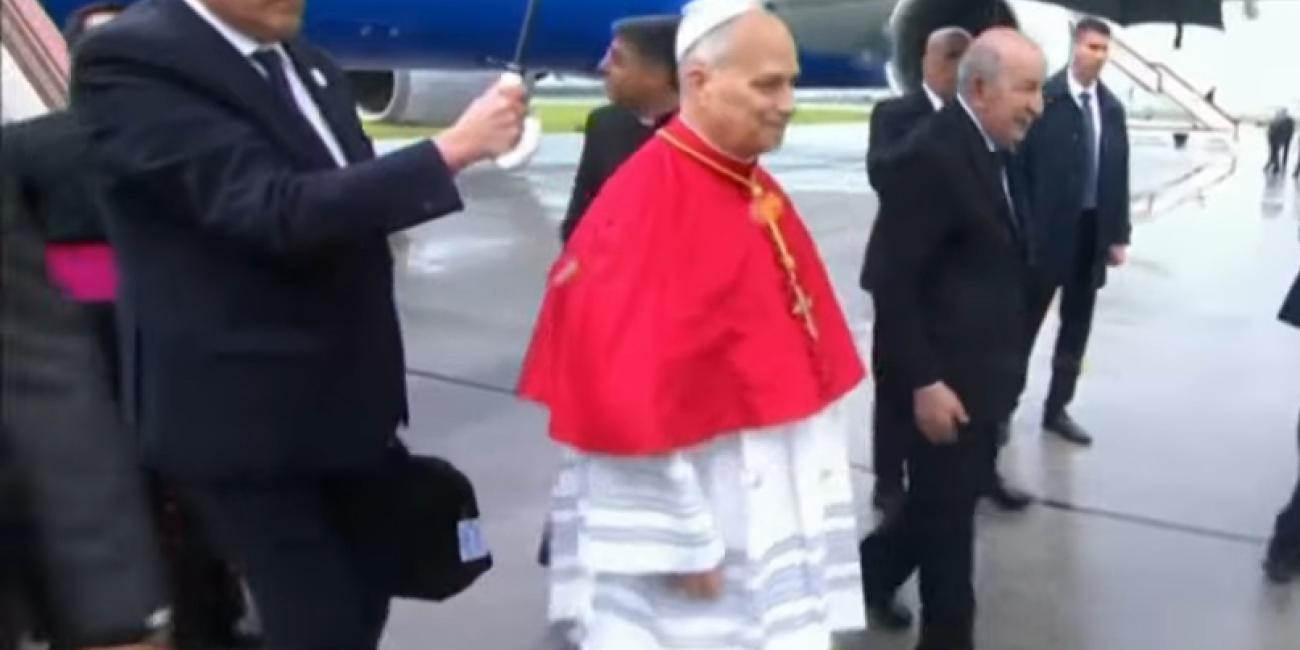
The Pope’s maiden trip to Africa, which began on April 13, will see him visit Algeria, Cameroon, Angola, and Equatorial Guinea. However, the absence of countries like Nigeria, Democratic Republic of the Congo, Kenya, Uganda, Tanzania, and Ethiopia has triggered backlash.
Critics argue that the omission is glaring, especially as Africa remains one of the fastest-growing regions for Catholicism globally.
Reacting strongly, the International Society for Civil Liberties and Rule of Law described the exclusion as a “fundamental oversight,” urging the Vatican to urgently reconsider its approach in future visits.
In a statement issued from Onitsha, the group warned that millions of Christians across Africa—many living under threat—need more than symbolic gestures.
“The Pope’s message of peace must not translate into silence in the face of suffering,” the group stated, cautioning against what it termed a “graveyard peace” for persecuted believers.
According to the organisation, Africa is home to an estimated 750 million threatened Christians, including about 200 million Catholics—many concentrated in countries left out of the current itinerary.
They stressed that nations like Nigeria and Democratic Republic of the Congo, each with tens of millions of Catholics, should have been prioritised.
Beyond the travel snub, the group also raised concerns over what it described as an imbalance in the global distribution of Catholic cardinals—particularly those eligible to vote in papal elections.
Countries such as Uganda and Kenya were highlighted as having no active Cardinal-Electors, while heavily populated Catholic nations like Nigeria and Democratic Republic of the Congo reportedly have only one each.
The group called for sweeping reforms, including increased representation for Africa in the College of Cardinals and stronger leadership within the Church to confront rising insecurity affecting Christians.
Despite the backlash, the Vatican has yet to issue an official response as the papal visit continues across selected African nations.
As reactions intensify, pressure is mounting on the Holy See to ensure future engagements reflect the realities and significance of Africa’s rapidly growing Christian population.