April 12, 2026
SUNTV Global Channel | International News
Tensions between Iran and the United States have surged dramatically following the collapse of high-stakes diplomatic talks in Islamabad, with Tehran declaring that negotiations have ended and the strategic Strait of Hormuz remains shut.
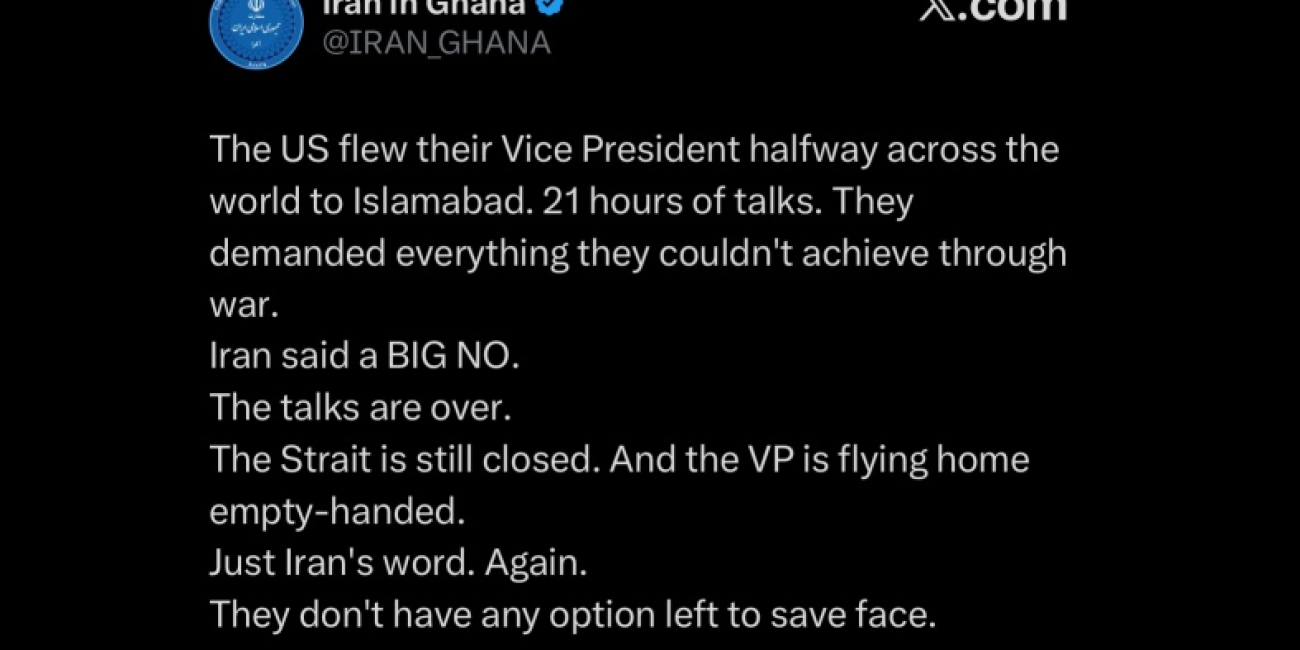
In a strongly worded statement released Sunday, the Iranian Embassy in Ghana confirmed that over 20 hours of intense discussions with U.S. officials failed to yield any agreement, signaling a hardened stance by Tehran on key issues.
“The talks are over. The Strait is still closed,” the statement read, emphasizing Iran’s refusal to concede to demands it described as unattainable through previous military pressure.
The Strait of Hormuz, a critical global oil transit route, remains at the center of the standoff. Its continued closure poses a significant threat to global energy supplies and international markets, raising fears of wider geopolitical instability.
On the American side, U.S. Vice President JD Vance, who led Washington’s delegation to the talks hosted in Pakistan, acknowledged the breakdown in negotiations.
“We’ve had substantive discussions, but we have not reached an agreement,” Vance stated.
“We need clear assurances that Iran will not pursue nuclear weapons or the capability to rapidly develop them.”
Despite describing the discussions as productive in part, Vance warned that the lack of progress could have serious implications, particularly for Iran.
The negotiations, which began on April 11, 2026, were facilitated by Pakistan’s Prime Minister Shehbaz Sharif, who played a mediatory role in an effort to de-escalate tensions between both nations. Sharif had earlier expressed optimism that the talks could pave the way for lasting peace in the region.
Parallel meetings were also held with an Iranian delegation led by Mohammad Bagher Ghalibaf, Speaker of Iran’s Consultative Assembly, highlighting the level of diplomatic engagement surrounding the talks.
However, the failure to reach a consensus has deepened uncertainty, especially as rhetoric intensifies on both sides.
U.S. President Donald Trump had earlier issued stern warnings over Iran’s actions in the Strait of Hormuz, cautioning against any obstruction of oil shipments or imposition of transit fees on vessels.
“Iran must not interfere with oil passage through the Strait,” Trump warned, hinting at possible consequences if the situation persists.
With diplomacy now stalled and strategic tensions rising, analysts warn that the crisis may be entering a more dangerous phase—one that could have far-reaching implications for global security and energy stability.
SUNTV Global Channel will continue to monitor developments as the situation unfolds.