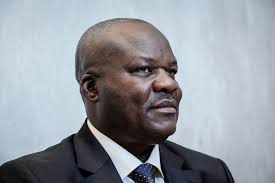
Paris, France — A French criminal court has sentenced former Democratic Republic of Congo (DRC) rebel leader and ex-lawmaker Roger Lumbala to 30 years in prison, holding him criminally responsible for some of the worst atrocities committed during Congo’s devastating Second Congo War.
The ruling, delivered by the Paris Criminal Court, marks one of the most significant international convictions linked to the Congolese conflict and sends a strong signal that alleged war criminals can no longer rely on borders or political influence to escape justice.
What the Court Found
Judges found that Lumbala, who led the Rally of Congolese Democrats–National (RCD-N) rebel group, was complicit in crimes against humanity committed by fighters under his command between 2002 and 2003 in eastern Congo.
The court ruled that Lumbala:
- Knowingly supported armed operations that targeted civilians
- Failed to prevent or punish atrocities carried out by his forces
- Benefited politically and militarily from a campaign of terror against local populations
Prosecutors detailed how rebel units loyal to Lumbala were responsible for mass executions, systematic rape, torture, forced labour, and large-scale looting, particularly during a military operation chillingly referred to by witnesses as “Effacer le tableau” (“Erase the board”).
Why France Tried Him
Although the crimes were committed in Congo, the case was tried in France under the country’s universal jurisdiction law, which allows French courts to prosecute individuals suspected of genocide, war crimes, or crimes against humanity — regardless of where the crimes occurred.
French authorities opened the case after Lumbala settled in France years after the war. He was arrested in December 2020 following complaints filed by victims and human rights organisations who accused him of living freely in Europe while survivors continued to suffer in silence.
A Long-Delayed Reckoning
The Second Congo War (1998–2003) involved multiple African countries and armed groups and is considered one of the deadliest conflicts since World War II, claiming millions of lives through violence, starvation, and disease.
Despite the scale of the atrocities, very few senior rebel or political leaders have ever faced trial.
After the war, Lumbala successfully rebranded himself as a politician, serving in Congo’s transitional institutions and later as a member of parliament — a transformation the court said did not erase responsibility for past crimes.
Court Rejects His Defence
Throughout the trial, Lumbala denied all allegations, claiming he was a political leader with no control over fighters on the ground. The judges rejected that argument, concluding that evidence and testimonies showed he exercised authority, coordination, and strategic influence over armed units.
Prosecutors initially sought life imprisonment, but the court imposed a 30-year sentence — one of the heaviest penalties under French law — along with a permanent ban from entering French territory after completion of his sentence.
Voices of the Victims
For survivors and families of victims, the verdict represents long-overdue recognition.
Human rights groups present in court described emotional scenes as witnesses listened to the judgment, many saying it was the first time the international community formally acknowledged their suffering.
“This judgment proves that time does not erase crimes against humanity,” one rights lawyer said. “Justice may be slow, but it can still arrive.”
What Happens Next
Under French law, Lumbala has the right to appeal. Separately, the court has scheduled hearings in 2026 to determine financial compensation for victims.
Legal experts say the case could open the door for more prosecutions of African war-era figures living abroad, especially those accused of exploiting weak judicial systems at home to avoid accountability.
Why This Case Matters
- It reinforces universal jurisdiction as a real tool — not just a theory
- It challenges the culture of impunity surrounding Congo’s wars
- It sends a warning to former warlords turned politicians worldwide
For many Congolese survivors, the conviction of Roger Lumbala is not just about prison time — it is about truth, memory, and accountability.
SUNTV Global Channel — Reporting justice without borders.