April 23, 2026 | Education & Foreign Affairs | SUNTV Global Channel Reporting
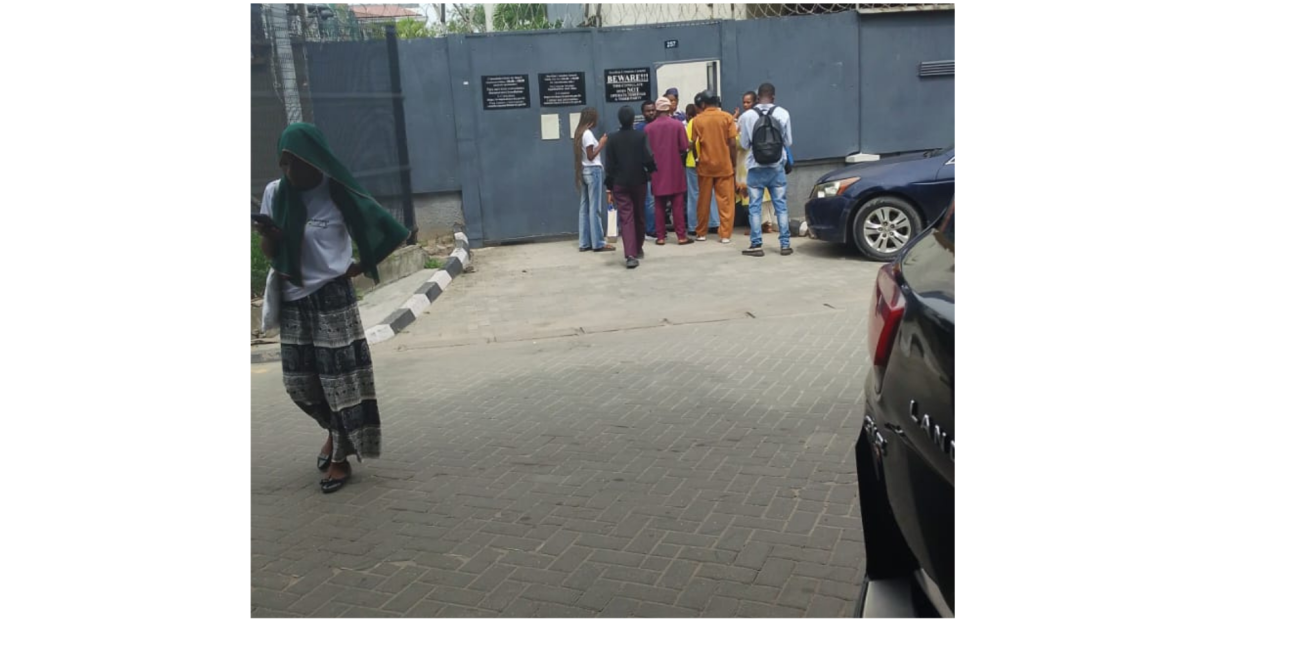
Dozens of Nigerian students have raised alarm and staged protests over prolonged visa delays and alleged irregularities at the , describing the process as frustrating, costly, and unsafe.
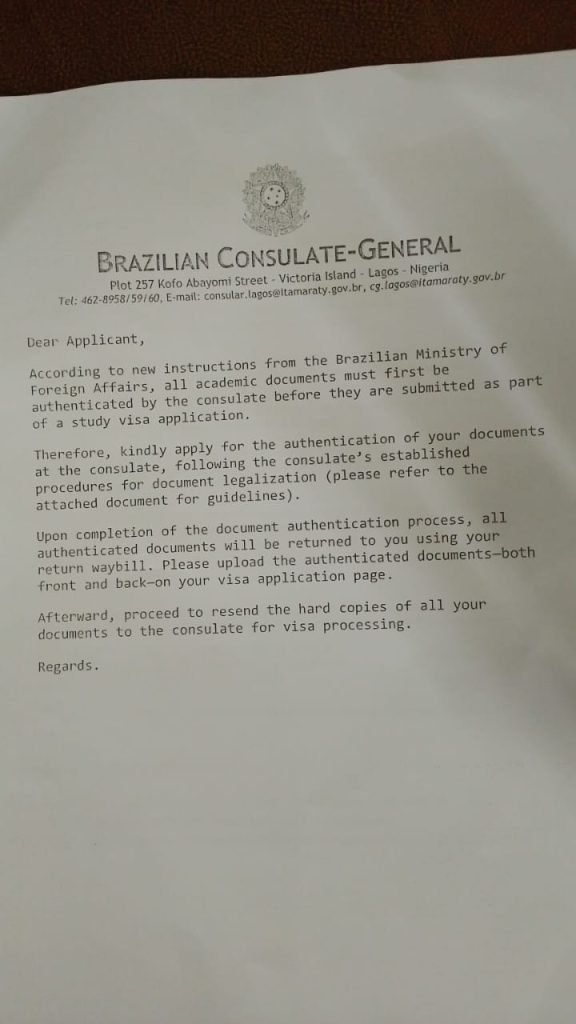
The protest follows the introduction of stricter directives by Brazil’s foreign ministry, requiring a complex double-authentication process for all academic documents before student visa applications can be processed.
Affected applicants say the situation has been worsened by the consulate’s continued refusal to allow physical submission or in-person interviews—a policy introduced during the era but still in force years later.
Instead, students are mandated to send sensitive documents, including passports, via courier services—an arrangement many have criticized as risky and financially draining.
“How can we be asked to waybill our passports? We are supposed to appear in person,” one frustrated applicant said, noting that other countries like Canada and the United States have since resumed physical submissions.
Several applicants narrated experiences of traveling to , only to be denied entry into the consulate premises despite spending heavily on accommodation and logistics.
“I flew in just to resolve my visa issue, but I was turned back. I’ve spent so much already,” another applicant lamented.
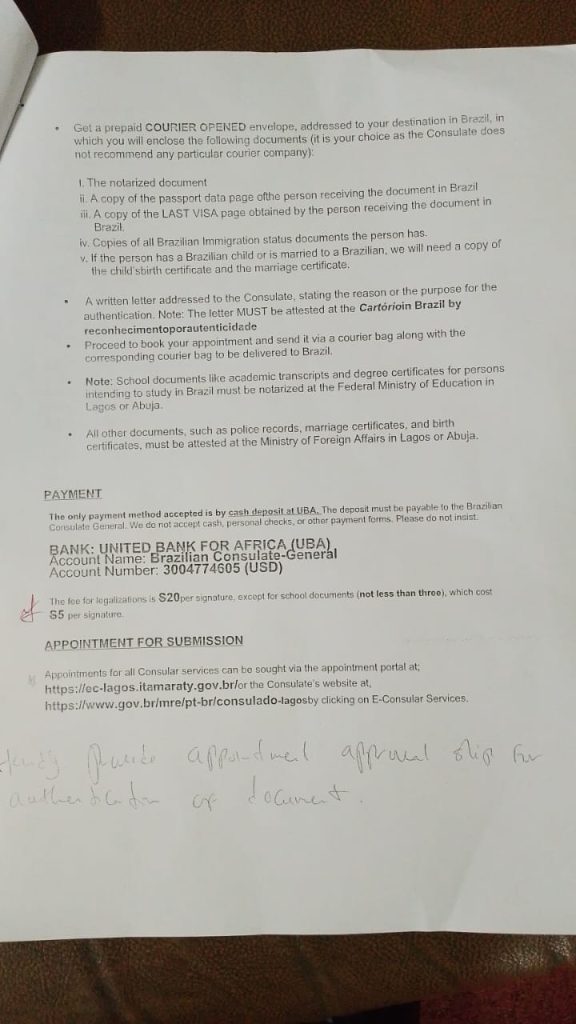
According to official guidelines, academic documents must first be notarised at the , then authenticated by the consulate, uploaded online, and resent physically multiple times before final processing—a cycle many described as unnecessarily repetitive.
In addition, applicants are required to notarise letters in Brazil through a process known as “reconhecimento por autenticidade,” forcing them to rely on third parties abroad before even applying locally.
Students also raised concerns over the consulate’s payment system, which only accepts cash deposits into a dollar account at , with no alternative payment methods allowed.
Beyond procedural challenges, some applicants alleged deeper issues, including possible corruption and lack of transparency in the process.
Technical difficulties have further compounded the situation, with many reporting frequent crashes and errors on the e-consular portal, preventing successful application submissions and risking missed academic deadlines.
The development has sparked growing calls for urgent reforms, improved transparency, and a return to standard in-person visa processing to ease the burden on Nigerian students seeking education opportunities in Brazil.
More updates on this developing story on SUNTV Global Channel.