By SUNTV Global Channel
January 6, 2026 | News | Exclusive
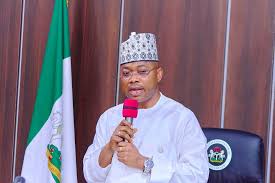
Fresh concerns have emerged over fiscal priorities in Kogi State following revelations that the administration of Governor Usman Ododo plans to spend over ₦2 billion on remodelling and capital works at the Government House in the 2026 fiscal year, despite the state’s worsening debt burden.
An exclusive review of the Kogi State draft budget for 2026 by SUNTV Global Channel shows that a total sum of ₦1.015 billion has been earmarked specifically for the remodelling of the Government House. In addition, another ₦1 billion was budgeted for what the government described as “minor capital works” at the Government House, to be executed through direct labour.
The proposed expenditure comes at a time when the state is struggling with rising debt obligations and declining fiscal space, raising questions about prudence and governance priorities.
Further scrutiny of the budget documents reveals that the Ododo administration also plans to spend ₦500 million on the construction of residential apartments for honourable members of the Kogi State House of Assembly and the head of legislative services on an “owner-occupier basis.”
This arrangement suggests that the lawmakers would eventually take ownership of the houses built with public funds, a move that has already drawn criticism from public finance analysts and civil society groups.
Debt Burden Deepens
The luxury spending plans stand in sharp contrast to the state’s debt profile. A previous SUNTV Global Channel review of the Kogi State Medium-Term Expenditure Framework (MTEF) for 2025–2027 showed that over 80% of the state’s Internally Generated Revenue (IGR) is projected to be spent on debt servicing throughout the period.
According to the MTEF, Kogi State is expected to generate ₦35.1 billion in IGR in 2025, while ₦27.9 billion—representing about 79.4%—is projected to go into debt servicing.
In 2026, the state’s IGR is again estimated at ₦35.1 billion, with ₦28.2 billion, or 80.4%, earmarked for debt repayment. By 2027, debt servicing is expected to rise further to ₦28.5 billion, amounting to 81.1% of projected revenue.
The MTEF document itself describes Kogi State’s debt profile as “vulnerable,” warning that the state faces a high risk of being unable to meet its debt obligations if revenues fall or expenditures rise unexpectedly.
“Kogi’s ‘Vulnerable’ risk profile reflects a very high risk that the state’s ability to cover debt service with its operating balance may weaken unexpectedly,” the document stated, citing weak revenue growth and rising liabilities as major threats.
Heavy Reliance on Federal Allocations
The document further noted that Kogi’s revenue base remains fragile, with about 80% of its income coming from federal allocations, including VAT and statutory transfers that are largely dependent on oil revenues. Internally Generated Revenue contributes less than 20% of total operating revenue, which is below the national average for Nigerian states.
This overreliance on federal transfers, combined with weak IGR performance, has intensified concerns about the sustainability of the state’s finances.
Debt Overshadows Social Spending
Budget performance data for the first half of 2025 paints a similar picture. Between January and June 2025, Kogi State reportedly spent ₦28.1 billion on debt servicing alone.
In comparison, critical sectors received significantly lower allocations. The Ministry of Works and Planning—including the Ministry of Works, the Road Maintenance Agency, and the state fire service—recorded a combined expenditure of ₦17.2 billion during the same period.
The Ministry of Water Resources received just ₦1.4 billion, while the Ministry of Health was allocated ₦12.3 billion. Education, one of the state’s largest social sectors, recorded an expenditure of ₦20.3 billion—still far below what was spent on debt charges.
Despite these challenges, SUNTV Global Channel recalls that the state government had earlier budgeted ₦7 billion in the 2025 fiscal year for the purchase of 60 vehicles for ministries, departments, and agencies.
Growing Public Concerns
Analysts and concerned residents have warned that continued spending on luxury projects amid mounting debt could worsen the state’s financial position and undermine service delivery.
As public scrutiny intensifies, calls are growing for greater transparency, fiscal discipline, and a shift in spending priorities toward education, healthcare, infrastructure, and revenue generation.
SUNTV Global Channel will continue to monitor developments surrounding the Kogi State budget and provide updates as more details emerge.