March 20, 2026 — SUNTV Global Channel
Fresh data has revealed that Nigerians are paying significantly more for cooking gas than citizens of several oil-rich and emerging economies, raising concerns over affordability and the country’s energy policies.
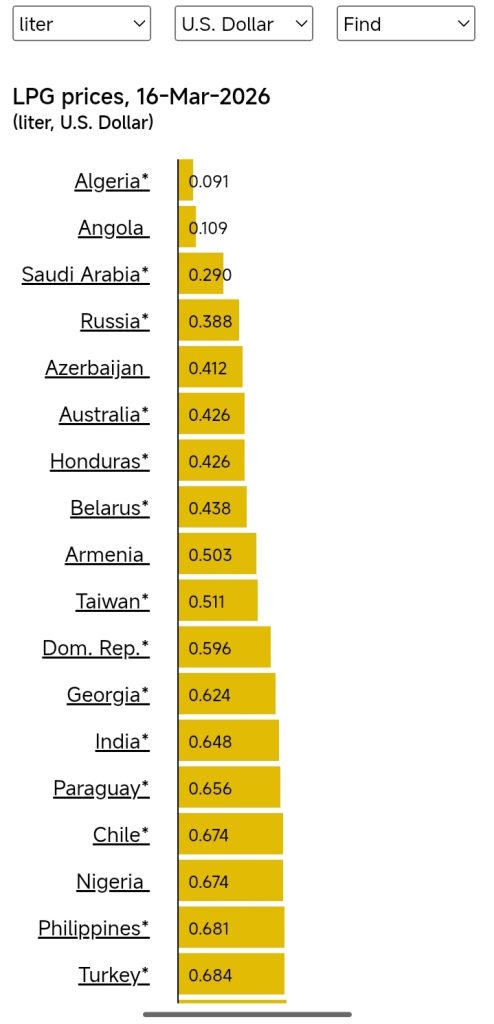
According to figures from the Global Petroleum Price portal, Liquefied Petroleum Gas (LPG) in Nigeria is currently priced at $0.674 per kilogram, placing it among the higher-priced nations globally despite being a major producer of oil and gas.
In stark contrast, LPG prices are far lower in countries like Saudi Arabia at $0.290/kg and Russia at $0.388/kg. Even more striking, Angola records just $0.109/kg, while Azerbaijan stands at $0.091/kg.
Other countries with cheaper LPG include India ($0.648/kg), Honduras ($0.412/kg), Belarus ($0.438/kg), and Armenia ($0.503/kg), with Nigeria only matching Chile at the same price level.
The disparity becomes more alarming when compared with income levels. While Saudi Arabia’s minimum wage is about $1,065, Nigeria’s stands at roughly $49, highlighting a massive gap in purchasing power.
Similarly, Russia’s minimum wage of about $321 further underscores the economic strain on Nigerian households, where rising gas prices are increasingly becoming unaffordable for many families.
The rising cost of LPG in Nigeria reflects broader instability in the country’s energy market, as prices of petroleum products continue to climb. Cooking gas has become a primary energy source for many households, especially as alternatives like kerosene become less accessible.
Recent developments have also worsened the situation. The Dangote Refinery reportedly increased its LPG gantry price to ₦800 per kilogram, up from ₦760/kg, a move linked to rising global crude oil prices and increasing production costs.
Experts say the combination of high energy costs and low wages is placing significant pressure on Nigerian consumers, with many now forced to reconsider their cooking energy options.
The latest figures have sparked renewed debate over Nigeria’s energy pricing structure and the need for reforms to make essential commodities more affordable for citizens.
SUNTV Global Channel will continue to track developments in the energy sector.