January 30, 2026 | News
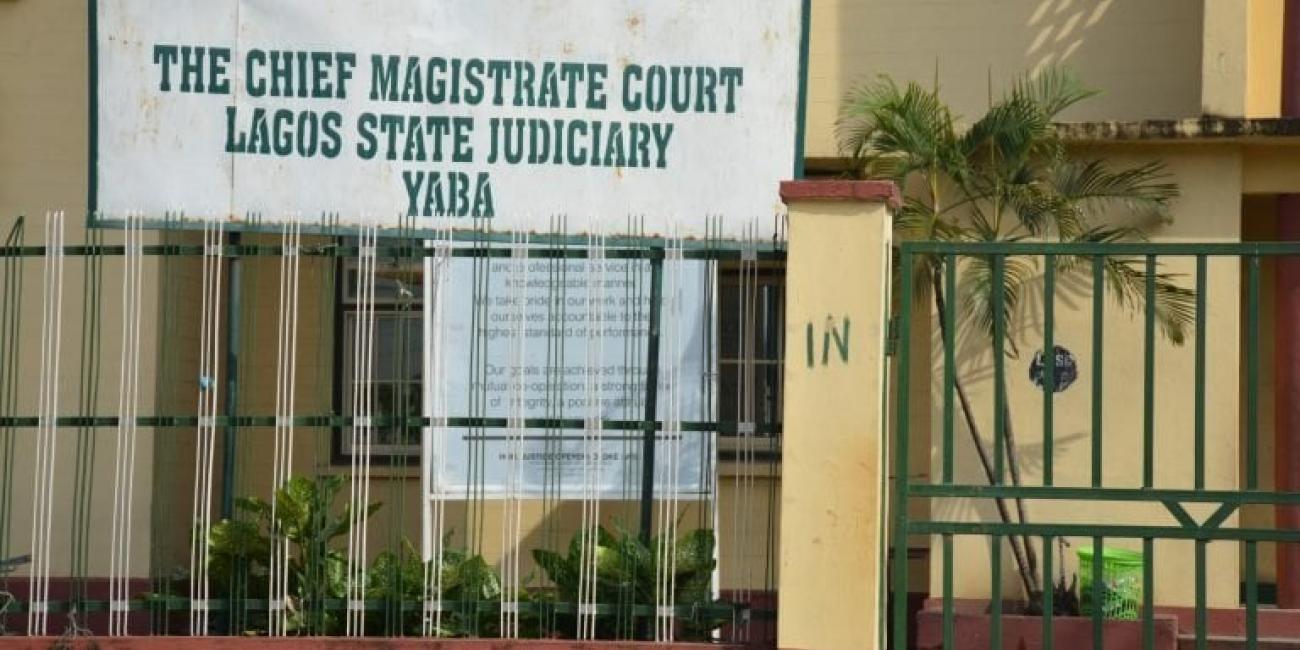
A Lagos Magistrate’s Court sitting in Yaba has ruled that the rank of Senior Advocate of Nigeria (SAN) does not bar a lawyer from appearing before a Magistrate’s Court, dismissing an objection raised by the prosecution against renowned human rights lawyer, Femi Falana (SAN).
The ruling followed heated legal arguments on Thursday during the arraignment of protesters arrested during an anti-demolition demonstration in Lagos State.
At the commencement of proceedings, the prosecutor urged the court to disqualify Falana from representing the defendants, contending that a Senior Advocate of Nigeria is prohibited from appearing before an inferior court such as a Magistrate’s Court.
The prosecution relied on the Court of Appeal decision in Registered Trustees of ECWA Church v. Ijesha (1999), which it claimed restricted SANs from appearing before Magistrate Courts.
However, Falana strongly opposed the objection, arguing that the authority cited by the prosecution was not applicable in Lagos State. He pointed the court’s attention to Section 9 of the Lagos State Magistrates’ Court Law, which expressly permits all legal practitioners called to the Nigerian Bar—regardless of rank or title—to appear before Magistrate Courts in the state.
Falana further anchored his argument on Section 36(6)(c) of the 1999 Constitution (as amended), which guarantees every person charged with a criminal offence the right to defend himself either personally or through legal practitioners of his choice. He stressed that any restriction based on a lawyer’s rank would amount to a violation of that fundamental constitutional right.
To reinforce his position, Falana cited the case of Attorney General of Lagos State v. Persons Unknown (2016), where the court held that the SAN rank does not prevent a lawyer from appearing before any court in Lagos State.
He also described the prosecution’s objection as inconsistent, noting that the same prosecutor was handling Commissioner of Police v. Seun Kuti, in which he and another Senior Advocate of Nigeria, Adeyinka Olumide-Fusika (SAN), are appearing as defence counsel without any challenge.
In her ruling, Magistrate I. O. Alaka dismissed the objection, holding that any lawyer duly called to the Nigerian Bar is competent to appear before a Magistrate’s Court in Lagos State and that the SAN rank does not constitute a legal restriction.
Following the ruling, Falana applied for bail on behalf of the defendants—Hassan Taiwo, popularly known as Soweto, and Dele Frank—arguing that the charges were illegal and amounted to an attempt to criminalise peaceful protest.
He reminded the court of the Court of Appeal’s landmark decision in IGP v. ANPP (2008), which affirmed Nigerians’ right to peaceful assembly and protest, and directed that the Public Order Act be amended to reflect that right.
Falana also drew attention to Section 83(4) of the Police Establishment Act 2020, which mandates the police to provide security for public meetings, rallies, or processions once notified. He told the court that the protesters had duly informed the police of their planned demonstration against forced evictions and demolitions, and that security was initially provided.
According to him, the police later acted unlawfully by dispersing the peaceful protesters, leading to arrests, injuries, and the use of teargas and live ammunition.
“This charge is a clear attempt to criminalise peaceful protest in Nigeria,” Falana told the court.
While advising Falana to reserve arguments challenging the competence of the charge for the trial stage, the Magistrate noted that such issues should not dominate bail proceedings.
Despite strong opposition from the prosecution, the court granted the defendants bail in the sum of ₦200,000 each, with conditions.