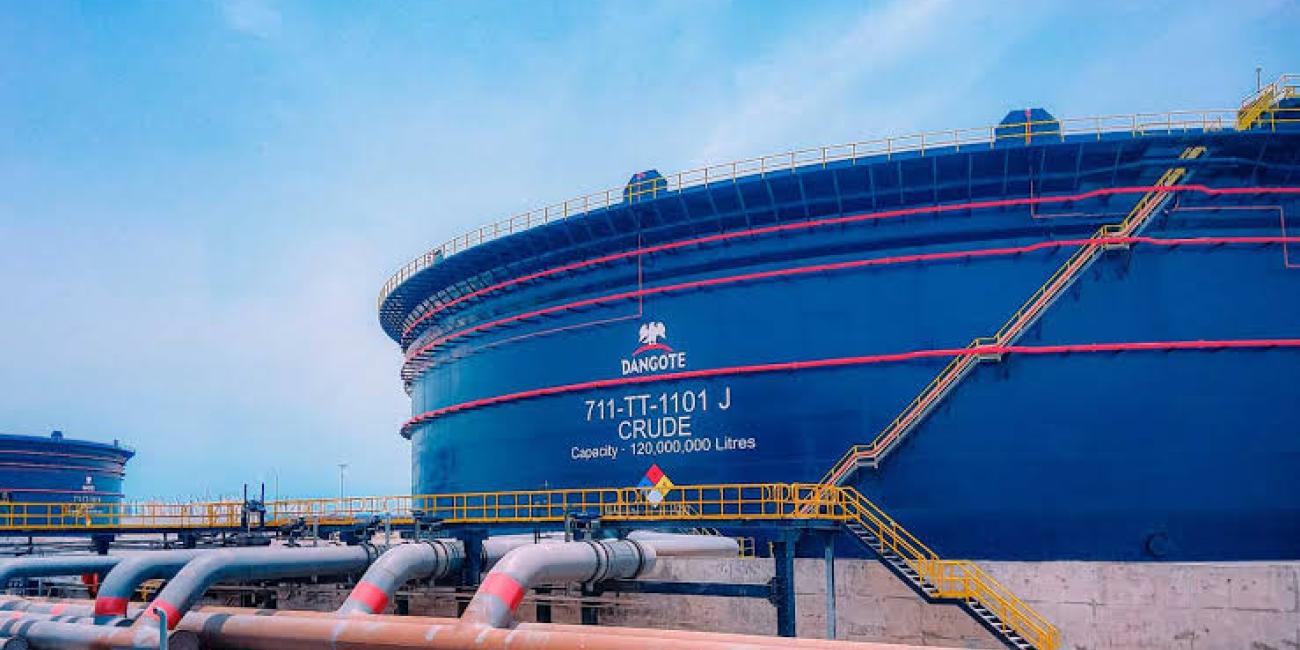
Nigeria’s import of crude oil from the United States more than doubled in the first eight months of 2025, rising by 101 per cent, according to new figures from the US Energy Information Administration. The data shows that the country imported 31.69 million barrels between February and August 2025, compared to 15.79 million barrels during the same period in 2024 — an increase of 15.9 million barrels .
No crude imports were recorded in January for either year. However, the breakdown across subsequent months reflects consistent increases for most of the period reviewed.
In February 2025, Nigeria imported 3.11 million barrels, slightly lower than the 3.61 million barrels purchased in February 2024—a decline of 13.8 per cent. But imports surged to 5.25 million barrels in March, up significantly from 3.42 million barrels the previous year, representing a 53.5 per cent rise.
April brought another increase, with 2.04 million barrels imported, compared to 1.54 million barrels in April 2024. Imports also climbed in May to 3.79 million barrels, well above the 2.08 million barrels recorded in 2024.
June saw the most dramatic spike, with imports jumping to 9.16 million barrels—a staggering 782.3 per cent increase over the 1.04 million barrels imported in June 2024. In July, imports increased slightly to 4.17 million barrels, compared to 4.10 million barrels last year. The figure for August 2025 also stood at 4.17 million barrels, though there was no published data for August 2024 for comparison.
The rising inflow of US crude highlights Nigeria’s deepening reliance on foreign oil amid inconsistent domestic supply and the ongoing adjustments in local refining capacity. With crude production still below expectations and refineries steadily ramping up operations, US light sweet crude has become an attractive option for Nigeria’s processors, particularly the Dangote Refinery.
Industry analysts say the refinery’s increased crude intake indicates a stabilising operational phase, with US crude often preferred due to its suitability for complex refining processes. However, this growing dependence on foreign supply underscores Nigeria’s longstanding dilemma: despite being Africa’s top oil producer and an OPEC member, the country continues to import crude and refined products due to non-functional state refineries.
Although the Dangote refinery was expected to rely predominantly on domestic crude, available data shows that foreign barrels still dominate its feedstock supply.
Year-on-year, the surge in crude imports—over 100 per cent—reflects a structural shift in Nigeria’s crude sourcing patterns. Earlier, the Federal Government confirmed that 67.65 million barrels were delivered to local refiners between January and August 2025. The Nigerian Upstream Petroleum Regulatory Commission said this allocation was made in line with the Petroleum Industry Act 2021 and the Domestic Crude Supply Obligation policy.
NUPRC spokesperson Eniola Akinkuotu noted that the crude was supplied to both modular and state-owned refineries, including Waltersmith, Aradel Energy, and facilities under the Nigerian National Petroleum Company Limited. However, this volume fell far short of refiners’ actual needs.
Local processors had requested 123.48 million barrels for the first half of 2025 alone—meaning they received about 45 per cent less than required. While the NUPRC projected that refineries would need 770,500 barrels per day, or 123.4 million barrels between January and June, supply has consistently lagged behind expectations.
Meanwhile, Nigeria’s crude and condensate production rose to 1.63 million barrels per day in August, but a significant portion continues to be exported, leaving local refineries struggling to secure feedstock.
Refinery operators have repeatedly complained that local producers prefer selling crude to international buyers, who pay in dollars, making it harder for domestic processors to compete. As a result, the $20bn Dangote Petroleum Refinery has increasingly turned to US imports.
Data from commodities analytics firm B Kpler showed that in July, US crude accounted for about 60 per cent of Dangote’s 590,000 barrels per day intake. Nigerian grades—including Amenam, Bonny Light, and Escravos—made up the remaining 40 per cent.
July marked the first time US crude overtook Nigerian supply in the refinery’s feedstock mix, signalling a growing dependence on foreign barrels as domestic sourcing challenges persist.
Kpler noted that Dangote’s record intake of 590,000 barrels per day in July was driven largely by the high volume of US imports, which reached about 370,000 bpd, compared to 220,000 bpd of Nigerian crude.
“While WTI has held a significant share in Dangote’s import slate since March, this is the first time US crude has overtaken Nigerian supply,” Kpler reported.