By SUNTV Global Channel
Despite growing concerns over xenophobic attacks targeting Nigerians and other African migrants in South Africa, the country has maintained its position as Nigeria’s leading trade partner on the African continent.
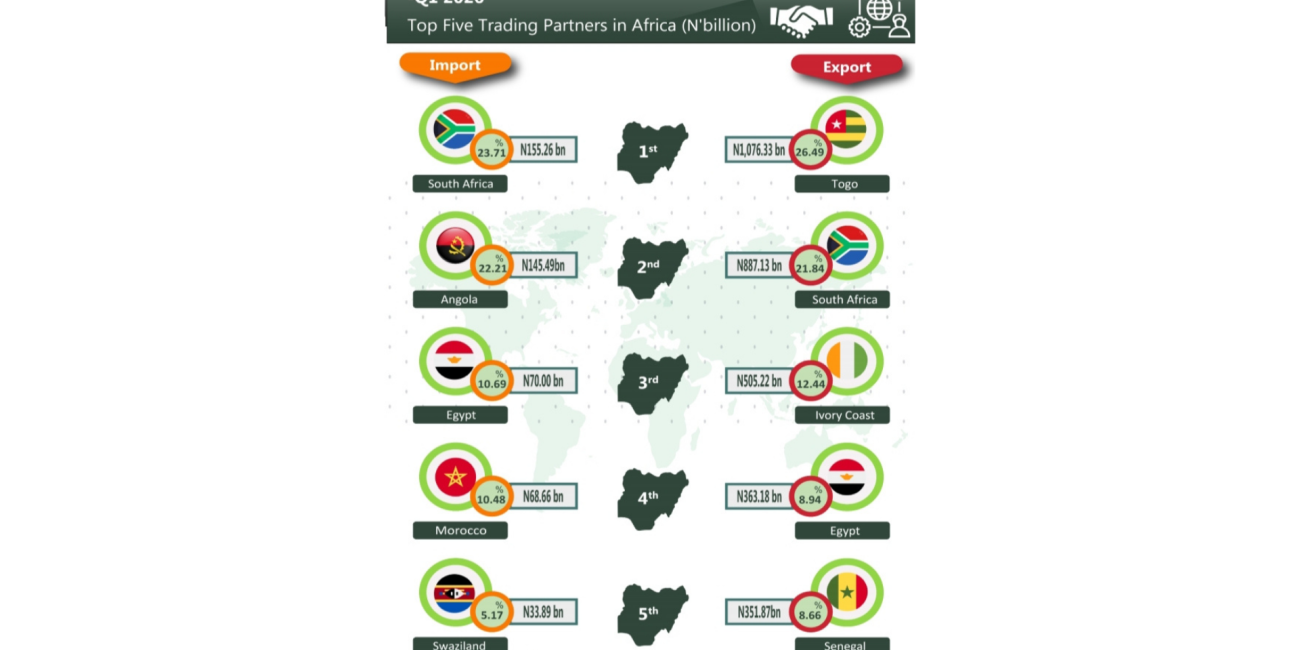
According to recent data released by the National Bureau of Statistics (NBS), South Africa exported goods valued at approximately N155 billion to Nigeria between January and March 2026, making it the largest African source of imports into Nigeria during the period.
The report showed that Angola followed closely with exports worth N145 billion, while Egypt recorded N70 billion. Morocco exported goods valued at N68 billion, while Eswatini (formerly Swaziland) accounted for N33 billion in exports to Nigeria.
The trade figures come amid renewed concerns about the safety of Nigerians living in South Africa following repeated incidents of xenophobic violence and anti-immigrant campaigns.
The Nigeria Union South Africa (NUSA) recently raised alarm over a June 30 ultimatum reportedly issued by anti-immigration groups, warning that foreign nationals could face increased harassment, attacks, and destruction of businesses if authorities fail to intervene.
Speaking from Johannesburg, NUSA Board of Trustees Chairman, Ekos Akpokabayen, urged the Nigerian government to engage South African authorities urgently to prevent tensions from escalating.
He noted that although the ultimatum did not come from the South African government, the activities of anti-foreign groups have created fear among migrant communities and could be exploited by criminal elements.
NUSA has also accused some South African politicians of fueling anti-migrant sentiments for political advantage, alleging that foreign nationals are often blamed for unemployment, crime, and economic challenges during election periods.
The latest figures highlight the complex relationship between Africa’s two largest economies, where strong trade ties continue to coexist with ongoing concerns over the treatment and safety of Nigerian citizens living in South Africa.
Source: National Bureau of Statistics (NBS)