May 29, 2026 | SUNTV Global Channel
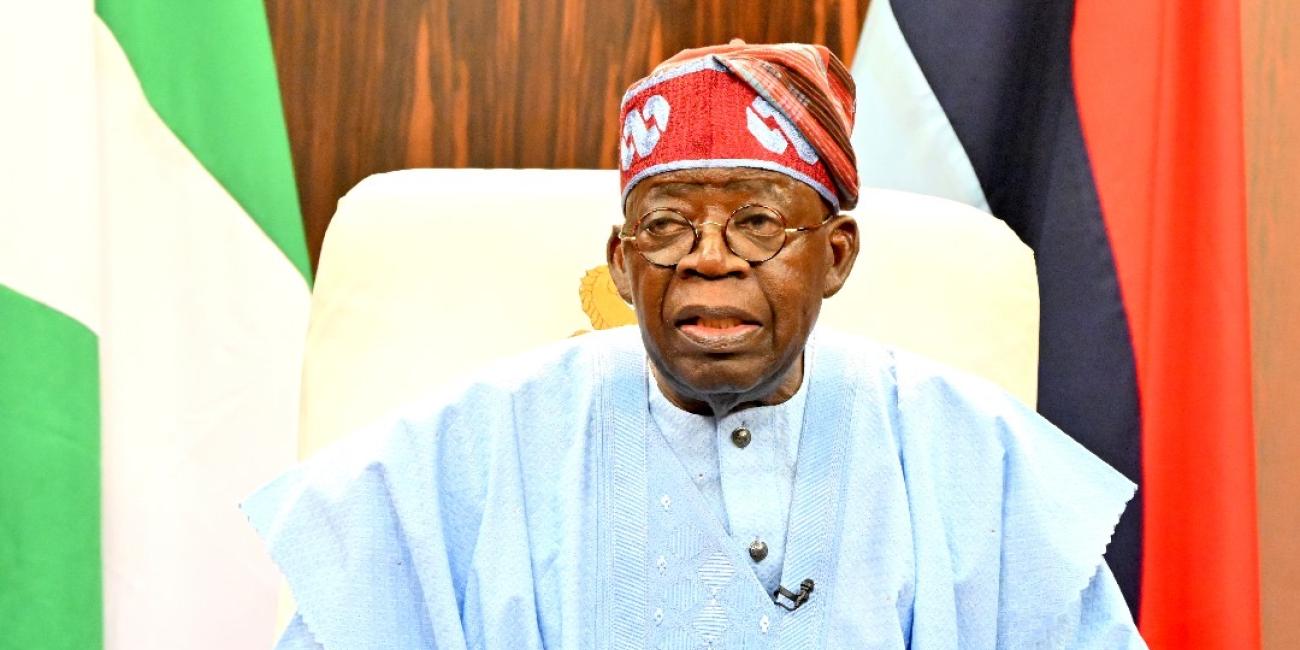
President Bola Ahmed Tinubu has declared that Nigeria is gradually recovering and stabilising economically under his administration despite worsening hardship, inflation, rising food prices, and growing public frustration across the country.
Speaking during a nationwide broadcast to mark the third anniversary of his administration on Friday, the President defended the controversial economic reforms introduced since taking office in May 2023, insisting they were necessary to prevent Nigeria from sliding into fiscal collapse.
Tinubu acknowledged the pains caused by the removal of petrol subsidy and the unification of foreign exchange rates but maintained that the sacrifices made by Nigerians were beginning to yield positive results.
“Today, I can confidently say that Nigeria has stabilised and is moving forward again,” the President stated.
According to Tinubu, his administration inherited a struggling economy burdened by mounting debt, declining revenues, subsidy payments, exchange-rate distortions, and growing insecurity.
He revealed that Nigeria was previously spending as much as ₦18.4 billion daily on petrol subsidy, amounting to over ₦4 trillion in 2022 alone.
“At the height of the subsidy regime, Nigeria was spending enormous resources sustaining fuel subsidies. Continuing on that path would have pushed the country toward economic breakdown,” he said.
The President also claimed that the multiple exchange-rate system under previous administrations created loopholes that allegedly led to over ₦8 trillion in losses through speculative activities and rent-seeking practices.
While admitting that the reforms triggered severe hardship for millions of Nigerians, Tinubu insisted the policies were unavoidable.
“The rising cost of living has placed enormous pressure on families, workers, and businesses. Young Nigerians searching for jobs also faced serious discouragement,” he admitted.
Despite criticisms from labour unions, civil society groups, and citizens over soaring inflation and declining purchasing power, Tinubu maintained that economic indicators were improving.
He pointed to the growth of the Nigerian stock market, claiming that market capitalisation increased from ₦30 trillion in 2023 to ₦160 trillion in 2026.
“Our economy is now more competitive and better positioned for sustainable growth than it was before,” he added.
The President further highlighted several ongoing infrastructure projects across the country, including the Lagos-Calabar Coastal Highway, Sokoto-Badagry Super Highway, Abuja-Kaduna-Zaria-Kano Road, and the East-West Road project.
According to him, more than 2,700 kilometres of highways and major roads are currently under construction, rehabilitation, or reconstruction nationwide.
Tinubu also stated that reforms in the oil and gas sector had attracted new foreign investments while boosting local refining capacity and reducing dependence on imported petroleum products.
On electricity supply, the President admitted the power sector still faces major challenges due to debt and underinvestment but assured Nigerians that his administration was working to strengthen the national grid and improve power transmission infrastructure.
“We are determined to power Nigeria into a new era of industrial growth and economic opportunity,” he said.
The President also highlighted government interventions in education, housing, healthcare, and agriculture.
According to him, the Nigerian Education Loan Fund has disbursed over ₦282 billion to more than 1.5 million students, while the Renewed Hope Housing Programme is delivering over 10,000 housing units across 14 states and the Federal Capital Territory.
On security, Tinubu claimed that military and security operations against terrorists, kidnappers, bandits, and oil thieves were yielding positive results, with several communities and highways becoming safer.
“While challenges remain, many communities are becoming safer and more economically active,” he said.
However, the President admitted that his administration had not solved all of Nigeria’s problems.
“We are not yet where we want to be, but we will continue working to reduce food prices, lower transportation costs, and create more jobs for Nigerians,” Tinubu assured.
He urged Nigerians to remain patient, united, and hopeful despite the current economic difficulties.
“Great nations are not built in comfort. They are built through sacrifice, resilience, courage, and collective purpose,” the President added.
Since the removal of petrol subsidy in 2023, Nigerians have continued to battle skyrocketing fuel prices, increased transportation costs, rising electricity tariffs, and worsening food inflation, leading to repeated nationwide criticisms of the government’s economic policies.